
The SIRTA Framework: The Neuroscience of Giving

Your Fundraising Event Isn’t a Transaction. It’s a Transformation Waiting to Happen.

What neuroscience teaches us about turning a room full of donors into a movement.

There’s a moment that every fundraising event professional knows.

The lights go down. The video plays. A story unfolds on the screen — a child, a family, a community changed. And somewhere in the room, something shifts. People lean forward. Eyes glisten. Hands reach for paddles before the auctioneer even opens their mouth.

That moment isn’t magic. It’s neuroscience.

And thanks to the work of Dr. Paul J. Zak — behavioral neuroscientist, professor at Claremont Graduate University, and author of Immersion: The Science of the Extraordinary and the Source of Happiness — we now have a framework that explains exactly what’s happening inside that room, and more importantly, how to design for it intentionally.

It’s called SIRTA. And it may be the most powerful tool in the modern fundraising event toolkit.

Why the Brain Has to Say Yes Before the Wallet Can

Here’s something that should reshape how you think about your next event: giving is not a financial decision. It’s an emotional one that the brain rationalizes afterward.

Dr. Zak’s two decades of research into neuroscience and human behavior have produced one of the most important insights in fundraising: immersion — a blend of sustained attention and emotional resonance — is what predicts whether a person will take action. When a brain is immersed, it values the experience. When it values the experience, it remembers it, shares it, and acts on it.

The implication for fundraising professionals is profound. You’re not designing a program. You’re designing a neurological journey. Every element of your event — from the temperature of the room to the arc of your mission moment story — either builds toward immersion or breaks it.

SIRTA is Dr. Zak’s neurologically-informed framework for designing that journey. Each letter represents a stage. Together, they create the conditions for something rare and powerful: a fundraising event that doesn’t just raise dollars, but deepens belonging and ignites a movement.

S — Staging: Before Anyone Can Be Moved, They Need to Feel Safe

Think about the last event you attended where you felt like an outsider. Maybe you didn’t know where to go, couldn’t find a seat, or sat through fifteen minutes of logistical announcements while your coffee grew cold.

Your brain was not ready to be generous. It was busy managing discomfort.

Staging is about removing friction before the first story is told. It means creating an environment — physical and psychological — where guests feel welcomed, oriented, and at ease. Dr. Zak is direct about this: our brains consume enormous energy, and when a person is anxious, stressed, or distracted, they simply don’t have the bandwidth to be present.

For fundraising events, staging is the hospitality layer that most organizations underestimate. It’s the warmth of your greeter at the door. The clarity of the signage. The music that creates atmosphere without overwhelming conversation. The acknowledgment that says, you belong here and we’re glad you came.

Staging is also how you signal to guests what kind of experience this is. Will tonight ask something of them? Will it be worth showing up for? The staging of your event is your first promise to your audience — and the brain is always watching to see if you’ll keep it.

Staging isn’t the opening act. It’s the foundation everything else is built on.

I — Immersion: The Story Is the Science

Once people feel safe, they’re ready to feel. And the most powerful vehicle for that — the one humans have used for thousands of years — is story.

Dr. Zak’s research is unambiguous: the classic narrative arc is one of the most effective tools for creating neurological immersion. Stories with human scale, real emotion, and genuine conflict create the kind of brain engagement that drives generosity. And here’s what his research found that might surprise you: celebrity narrators and cinematic production value make almost no difference. What matters is authenticity.

A real person. A real struggle. A real change. That’s all it takes.

For fundraising professionals, this reframes the entire approach to your mission moment. The story you tell on stage — or on screen — doesn’t need to be polished to the point of perfection. It needs to be honest. The donor who came from nothing. The child who almost didn’t make it. The volunteer who showed up when no one else did. Real people, telling the truth about what’s at stake.

Immersion is also contagious. When one person in a room becomes emotionally engaged, the people around them feel it too. This is why the live event format — a room full of people experiencing a story together — remains one of the most powerful fundraising tools we have. The energy is shared. The emotion amplifies. The brain registers not just the story, but the fact that everyone around me is feeling this too.

This is belonging becoming belief.

Your mission moment isn’t a fundraising tactic. It’s a window into why the world needs your organization to exist.

R — Relevance: The Brain Only Goes Deep on What It Cares About

Here’s where so many organizations leave generosity on the table: they tell a beautiful story to the wrong audience.

Dr. Zak’s research shows that even an enjoyable experience won’t create deep immersion if it isn’t relevant to the person having it. The brain allocates processing power based on personal connection. When something feels relevant — when it maps onto a person’s values, experiences, or identity — the brain leans in. When it doesn’t, the brain politely files it away and moves on.

For fundraising events, relevance is the difference between a story that touches people and a story that moves them.

Relevance means knowing your audience. Not just their demographic profile, but their emotional relationship to your mission. Are your guests in the room because they’re survivors? Parents? Community members? Faith-driven givers? Each of these audiences has a different door into your cause, and your job is to find it and open it for them.

Relevance also shows up in the small moments: the table conversation prompts that connect guests to the mission before the program begins, the speaker who shares a personal connection to the work, the impact metric that’s framed in terms of this neighborhood, this school, this family — not an abstraction.

The more specific your story, the more universal its resonance. This is the paradox of relevance: the details that make a story feel personal are exactly what make it feel like mine.

When people see themselves in your mission, the ask becomes an invitation to act on something they already care about.

T — Target: Find the People Already on Fire

Every room has them. The guest who leans forward during the video. The couple who tears up before the speaker finishes the first sentence. The longtime donor who brought three new friends to the table.

Dr. Zak calls these people “immersion outliers” — individuals whose neurological response to your event is off the charts. His research has found that they tend to score high on two traits: empathy and agreeableness. They are the ones who feel the most, and who most readily translate that feeling into action and advocacy.

In a fundraising context, these are your superfans. And Dr. Zak is clear: failing to identify and engage them is a missed opportunity of the highest order, because they are so easy to find, and so ready to be activated.

Targeting isn’t about exclusivity — it’s about intentionality. It means designing moments in your event that give your most engaged guests a pathway to go deeper. A post-event conversation with leadership. A special invitation to a mission site visit. A text or call the following week that says, we saw how much tonight meant to you, and we’d love to stay in that conversation.

When you find your superfans and invest in them, something remarkable happens: they don’t just give more. They recruit others. They tell the story at their dinner tables and in their boardrooms. They become the movement.

Identifying your most immersed donors and inviting them further in isn’t just fundraising strategy — it’s how organizations grow from transactional to transformational.

A — Action: Give the Brain the Resolution It’s Been Building Toward

Here is perhaps the most important insight in the entire SIRTA framework — and the one most often fumbled at the finish line:

When a brain is immersed, it wants to do something. The emotional energy that’s been building through your event is looking for an outlet. If you’ve staged the room well, told a story with authentic human stakes, made the mission feel relevant, and activated your most engaged guests — the Ask is not an interruption. It’s a relief.

Dr. Zak puts it plainly: the more immersive the experience, the more likely a person is to take action. And the action has to be clear. Specific. Achievable. The brain craves resolution, and your job is to provide it.

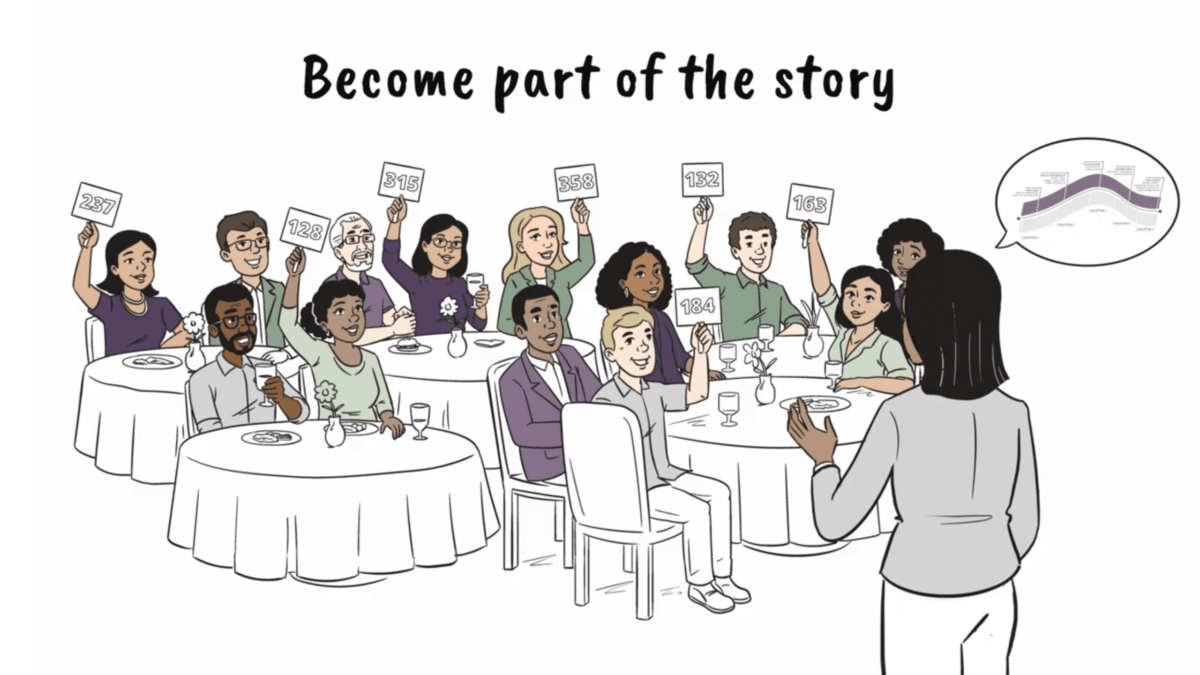
For fundraising events, this means the Ask moment isn’t about pressure — it’s about permission. You are giving your guests permission to act on what they’re already feeling. The paddle raise, the fund-a-need, the pledge card, the volunteer sign-up — these aren’t the climax of a sales pitch. They are the natural conclusion of a carefully designed emotional journey.

Action also extends beyond the giving moment. What do you want your guests to do next? Who should they call? What should they share? How should they show up for the mission between now and your next event? Every event should end with not just a clear ask, but a clear next step — because immersion, once created, should never be wasted.

The Ask is not the end of the story. It’s the beginning of the donor’s role in it.

The Framework in the Room: SIRTA as Event Design Philosophy

When you lay SIRTA across the arc of a fundraising event, something becomes clear: this isn’t a checklist. It’s a philosophy.

It’s a commitment to treating your guests as whole human beings whose presence in that room represents something meaningful — not a funding source, but a fellow believer in the world your organization is building.

  • Staging says: I see you. You are welcome here. You are safe.
  • Immersion says: Let me show you why this work matters in the most human way I know how.
  • Relevance says: This story is about you, too — your values, your community, your future.
  • Targeting says: I see how much you care, and I want to go deeper with you.
  • Action says: Here is your moment. Here is how you become part of this.

Together, these five elements don’t just produce a better fundraising outcome. They produce a better human experience. And that’s the point.

Because here’s the truth that every seasoned event professional already knows in their gut, and that Dr. Zak’s neuroscience now confirms: people don’t give because they’re asked. They give because they feel connected. To a story, to a mission, to each other, and to something larger than themselves.

When you design an event that creates genuine immersion — that earns the brain’s attention, earns the heart’s trust, and earns the body’s willingness to act — you’re not running a fundraiser.

You’re building a movement.

Dr. Paul J. Zak’s SIRTA framework is drawn from his book Immersion: The Science of the Extraordinary and the Source of HappinessTo hear Dr. Zak discuss SIRTA in the context of nonprofit fundraising events, listen to his conversation with Samantha Swaim and Kristin Steele on The Fundraising Elevator Podcast (Episodes 89 & 90), available on the Swaim Strategies Substack and wherever you listen to podcasts.

Similar Posts

Guest Blog: 9 Proven Sponsorship Strategies for Charity Golf Tournaments

9 Proven Sponsorship Strategies for Charity Golf Tournaments Note: This is a guest post from Jen Wemhoff, Communication

Guest Blog: Questions to Ask When Finding the Best Video Team to Produce Your Fundraising Videos

Fundraising videos are one of the most powerful tools nonprofits have to connect with donors. When done well, they build

The Rise of Auction Tech: Why Millennials and Gen Z Are All In

Auction technology is no longer optional, especially if you're aiming to engage younger donors. Gen Z and Millennials ha