Smarter Sponsorship Strategies for Your Charity Golf Tournament

Sponsors are the financial backbone of most charity golf tournaments. They make the difference between an event that covers its costs and one that genuinely moves the needle for your mission. But securing the right sponsors and the right dollars doesn’t happen in the weeks before your tee time. It happens in the months before. And it starts long before a proposal ever lands in someone’s inbox.

Here’s what experienced event organizers know: sponsorship is not a transaction. It’s a relationship. And like any relationship worth having, it takes time, intention, and a genuine desire to understand the person on the other side of the table.

Start Earlier Than You Think You Need To

If you’re reaching out to sponsors 6 to 8 weeks before your event, you’re already behind. The organizations and businesses that make the best partners, which are the ones who show up engaged, invested, and ready to champion your cause, are planning their charitable giving, marketing budgets, and community investment calendars months in advance.

The sweet spot for sponsor outreach is 6 to 12 months before your event.

That’s not a typo. Six to twelve months.

Most businesses, especially mid-size companies and corporate sponsors, operate on budget cycles. Sponsorship dollars are often allocated in Q4 for the following year or at the start of a new fiscal year. If you call in April about a June event, you may be asking someone to find money that’s already been committed elsewhere.

When you reach out early, you do more than beat the calendar, you signal that you’re a serious, well-organized partner worth investing in. You give your sponsors time to secure internal approvals, plan their brand presence, and build genuine excitement around your event. You give yourself time to have real conversations instead of rushed ones.

Start building your prospect list now. Warm up relationships. Have coffee. Ask good questions. By the time you’re ready to make a formal ask, you’ll be talking to people who already know who you are and why your event matters. That groundwork is the foundation every strong sponsorship is built on.

Want to go deeper on sponsorship timing and strategy? Check out our Fundraising Elevator episode with Mariah Monique of The Sponsorship Catalyst, where she shares expert guidance on approaching sponsors as equal partners and building relationships that last beyond a single event.

A Proposal Is a Starting Point, Not a Destination

Here’s a truth that changes everything about how you approach sponsors: your sponsorship menu is just a conversation starter.

Too often, organizations spend weeks perfecting a tiered sponsorship package like Gold, Silver, Bronze, and then treat it as the final word. They hand it over and wait. But the most successful sponsorship relationships are rarely built that way.

The most powerful thing you can do before you ever put a proposal together is simply ask: What matters to you right now?

What is this business trying to accomplish? Are they launching into a new market and need brand visibility? Are they trying to recruit employees and want to be seen as a community-minded workplace? Are they a family business whose owner lost someone to the cause your organization fights, and this is personal? Do they want client entertainment opportunities on the course?

When you understand what a sponsor actually needs, not what you assume they need, you stop selling and start co-creating. You stop presenting a menu and start building something together.

This is partnership, and partnership lasts. Transactional sponsorships rarely renew. Partnerships almost always do.

So yes, have your offerings ready. Know your inventory: hole sponsorships, presenting sponsorships, signage, digital placement, branded on-course activations. Know the value you can deliver. But hold that menu loosely. Walk into every sponsor conversation curious, not convinced. Be willing to build something you’ve never built before because it’s exactly what that partner needs.

The organizations that build multi-year sponsorship relationships are the ones who treat every proposal as version 1.0: a place to begin, not a place to land. At Swaim Strategies, we talk about this idea all the time: creating sponsorship partnerships that last isn’t about having the best deck. It’s about doing the listening work first.

Use AI as a Thought Partner to Build Smarter, More Personalized Proposals

Once you understand what your sponsor cares about, you need to translate that insight into a compelling, customized proposal and this is where a tool like Claude can be genuinely transformative.

Think of Claude not as a shortcut, but as a thought partner available to you at any hour, without judgment, ready to help you think more clearly and create more strategically.

Here’s how it works in practice: You bring your current sponsorship offerings including your tiers, your benefits, your event details, and your audience demographics. You share what you’ve learned about your prospective sponsor like their business priorities, their brand values, what they told you matters to them. Then you ask Claude to help you find the connection between what you have and what they need.

Claude can help you:

  • Identify alignment you might have missed. Is your sponsor a healthcare company? Claude can help you frame your golfer audience through a wellness and community lens that resonates with their brand values.
  • Draft a custom narrative. Instead of a generic sponsorship deck, you get a proposal that speaks directly to this partner’s goals, in language that reflects their priorities.
  • Pressure-test your offer. Ask Claude to look at your proposal from the sponsor’s perspective. What questions might they have? What objections might surface? What feels missing?
  • Generate alternative configurations. If a sponsor’s budget is smaller than anticipated, Claude can help you quickly rework an offer that still delivers meaningful value without feeling like a consolation prize.


The key is coming in with real information and the more specific you are about both your offerings and your sponsor’s world, the more useful the output. Claude doesn’t replace your relationships. It sharpens your thinking and your preparation so that when you walk into that meeting, you’re showing up with something that feels made for them. Because it was.

This is the kind of strategic preparation we champion at Swaim Strategies: using every tool available to help you show up as a thoughtful, prepared partner rather than someone just looking to fill a sponsorship slot.

Practice the Conversation Before It Counts

You can have the most thoughtfully customized proposal in the world and still leave value and a relationship on the table if you aren’t ready for the conversation itself.

Sponsor solicitations are high-stakes. Even experienced fundraisers feel the nerves. And the truth is, most of us don’t get nearly enough practice having these conversations before they matter.

That’s exactly what Practivated was built to solve.

Developed by nonprofit strategist Mallory Erickson, Practivated is an AI-powered conversation simulator built specifically for fundraisers. It’s a private, judgment-free space to rehearse real conversations, including sponsor asks, before they happen. Think of it the way a pilot thinks about a flight simulator: you want to navigate the hard moments before you’re at altitude.

With Practivated, you can:

  • Simulate a sponsor conversation before you ever pick up the phone to work through your opening, your discovery questions, your ask, and your response to objections
  • Practice the moments that trip most people up like the pause after you name a dollar figure, the pivot when a sponsor pushes back, the recovery when a conversation goes somewhere unexpected
  • Receive immediate, personalized feedback on your communication effectiveness, not to make you sound scripted, but to help you sound like the most confident, prepared version of yourself
  • Build the muscle memory of the ask so that when you’re finally sitting across from a sponsor you’ve been cultivating for months, confidence replaces anxiety


Fundraising professionals who’ve worked with Practivated often name the same insight: it’s not knowledge that holds fundraisers back, it’s the absence of realistic practice. You know your mission. You know your event. Practivated helps you know the conversation.

When you’ve practiced your sponsor ask with Practivated, something shifts. The meeting stops feeling like a performance and starts feeling like a conversation, which is exactly what it should be.

Interested in how AI is reshaping the way fundraisers prepare and connect? We’ve been exploring this territory on The Fundraising Elevator podcast including a powerful conversation about how technology can support more human, confident donor engagement without replacing the relationships at the center of this work.

Putting It All Together: Your Sponsorship Timeline

The best sponsorship outcomes are the ones that generate real revenue and real relationships year after year, and they don’t happen by accident. They happen because someone cared enough to start early, listen deeply, prepare thoughtfully, and show up ready.

Here’s a practical timeline to guide your process:

6 to 12 months out: Begin identifying and warming up sponsor prospects. Have exploratory conversations focused entirely on understanding their goals and interests. No ask yet, just listening.

4 to 6 months out: Develop your customized proposals. Use Claude to help you translate what you’ve learned about each sponsor into an offer that reflects their priorities. Practice your conversations with Practivated until you feel genuinely ready.

3 to 4 months out: Make your formal asks. By now, you’ve built enough relationship that the ask is a natural next step, not a cold pitch.

1 to 2 months out: Confirm commitments, gather assets, and begin delivering on the partnership. Make sure sponsors feel like insiders not afterthoughts as the event approaches.

Post-event: Steward every sponsor with a thoughtful follow-up including impact data, photos, and a genuine thank you that connects their investment to real outcomes. Plant the seeds for next year’s conversation before this year’s event is fully wrapped.

The post-event moment is one most organizations under-invest in and it’s where the real partnership is either built or lost. If you want sponsors to come back year after year, they need to feel the impact of their investment, not just see their logo on a sign.

Golf Is a Relationship Sport. So Is Sponsorship.

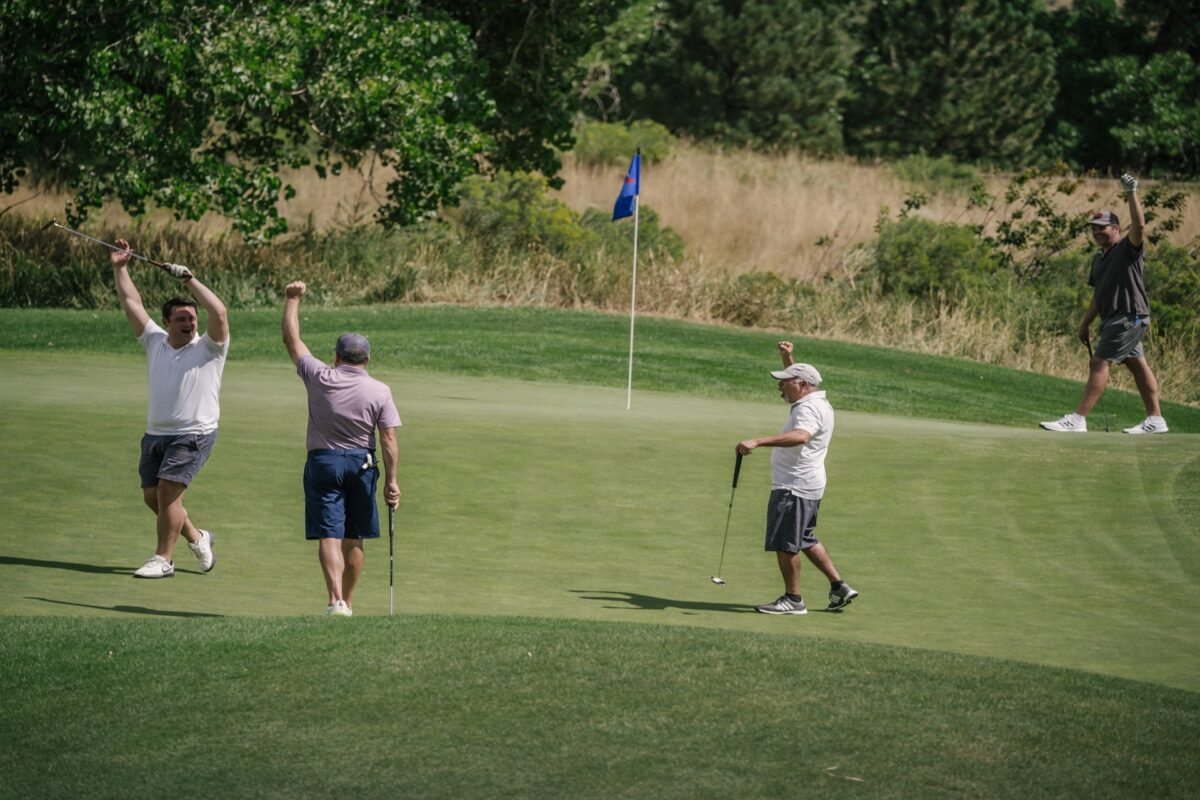
Golf tournaments have a unique power to bring people together around a cause they care about. There’s something about four hours on a course that strips away the formality and creates space for real conversation, shared experience, and genuine connection. Your sponsors can feel that power too, but only if you give them the chance to be real partners in it.

Start early. Listen well. Build something together. Practice until the ask feels natural. And show up ready to have the kind of conversation that doesn’t just close a sponsorship, but one that opens a relationship.

At Swaim Strategies, we believe events are one of the most powerful tools a nonprofit has not just to raise money, but to build the kind of community that sustains a mission for years. We’d love to help you build yours.

More Resources from Swaim Strategies

Similar Posts

Samantha Swaim Featured in OregonVoyager’s Hidden Gems Series

Samantha Swaim Featured in OregonVoyager’s Hidden Gems Series Swaim Strategies is deeply connected to our community in

Catch Fundraising Event Insights on The Fundraising Elevator Podcast

Recent episodes have tackled building community-centric events, the economics of philanthropy, the neuroscience of givin

The SIRTA Framework: The Neuroscience of Giving

What neuroscience teaches us about turning a room full of donors into a movement.